 Décryptage des politiques migratoires européennes
EU-Turkey agreement: Ten years later, what consequences?
An article by Didem Danış (GAR)
Ten years ago, on 18 March 2016, the European Union signed an agreement with Turkey that has since become emblematic of the externalisation of European borders to third countries. This policy has had documented consequences in terms of deaths and human rights violations at the EU’s external borders, particularly in the Aegean Sea and on the islands that became “hotspots”. But what consequences did this agreement create for migrants in Turkey? In this article, Turkish sociologist Didem Danış shows that European externalisation has had the lasting effect of strengthening Turkey’s migration control regime.
This article stems from the contribution by Didem Danış, a Turkish sociologist specialising in migration and based in Istanbul, at a Migreurop political meeting held in April 2026. She was invited by ACORT, a Franco-Turkish member of the Migreurop network. Didem Danış is also a co-founder of the Association for Migration Studies (Göç Araştırmaları Derneği – GAR), which brings together social science researchers working from a critical perspective on contemporary migration issues in Turkey. An earlier version of this text was published in Turkish on the GAR (Association for Migration Research) website under the title “Ten Years after the EU–Türkiye Migration Deal: The Institutionalization of Precarity and the Erosion of Access to Rights.
Ten years after the signing of the EU-Turkey agreement on 18 March 2016, it has become necessary to revisit this decisive moment in European migration policy. Presented at the time as a pragmatic response to an emergency situation, the agreement was primarily intended to limit irregular arrivals to the Greek islands and to organise closer cooperation between the European Union and Turkey. But, with the benefit of hindsight, it is clear that its effects went far beyond the mere management of crossings in the Aegean Sea.
Since 2016, Turkey has occupied a central place in European migration governance. It has, de facto, become an extension of the European Union’s external borders. It is important to recall that for more than a decade, Turkey has hosted one of the largest refugee populations in the world, particularly Syrians who arrived following the outbreak of the war in Syria in 2011. Most of these people do not benefit from refugee status in the full sense of the term, but from a system of “temporary protection”, which grants them certain rights while keeping them in a legally precarious situation.
The main argument of this text is simple: the EU-Turkey agreement did not merely regulate migration flows; it contributed to the institutionalisation of a lasting regime of precarity, embedded in the broader dynamic of the externalisation of European migration policies. In other words, the European Union shifted part of the management of its borders to a neighbouring country, leaving people in exile to bear the concrete consequences of this reorganisation.
A Turning Point in the Externalisation of Migration Policies
The agreement of 18 March 2016 is part of a now well-established logic: externalisation. This term refers to the process by which the European Union directly or indirectly delegates part of the management of migration to third countries located beyond its own borders. It is therefore not simply a matter of monitoring European borders, but of shifting their management towards countries of transit or destination.
Beyond the immediate objective of limiting crossings to the Greek islands, this agreement profoundly reshaped relations between the European Union and Turkey in the field of migration. Three elements are essential. First, Turkey is considered by the European Union to be a “safe third country”, making it possible to transfer part of the management of asylum applications outside the EU. This lies at the very heart of externalisation policies.
Second, the European Union established a massive financial mechanism through the FRIT (Facility for Refugees in Turkey). Initially set at €3 billion, this funding gradually reached approximately €11 billion transferred to Turkey. These resources played an important role in supporting essential services, particularly education and healthcare for Syrian refugees.
Finally, this agreement, initially presented as temporary, gradually evolved into a structural mechanism, durably shaping migration policies in Turkey. It should therefore be understood not as a mere short-term response, but as a model of externalised governance.
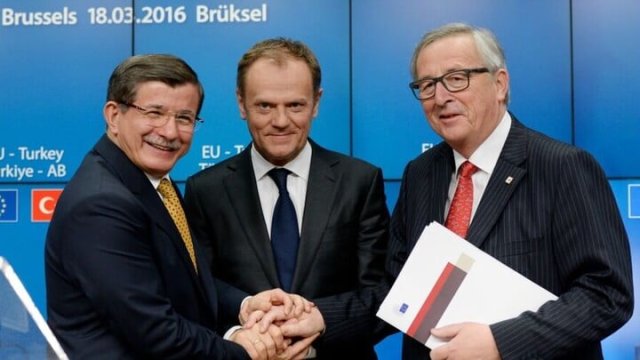
Turkish Prime Minister Ahmet Davutoglu, European Council President Donald Tusk and European Commission President Jean-Claude Juncker at the European Union summit held on 18 March 2016 in Brussels. Credit: Thierry Charlier/AFP
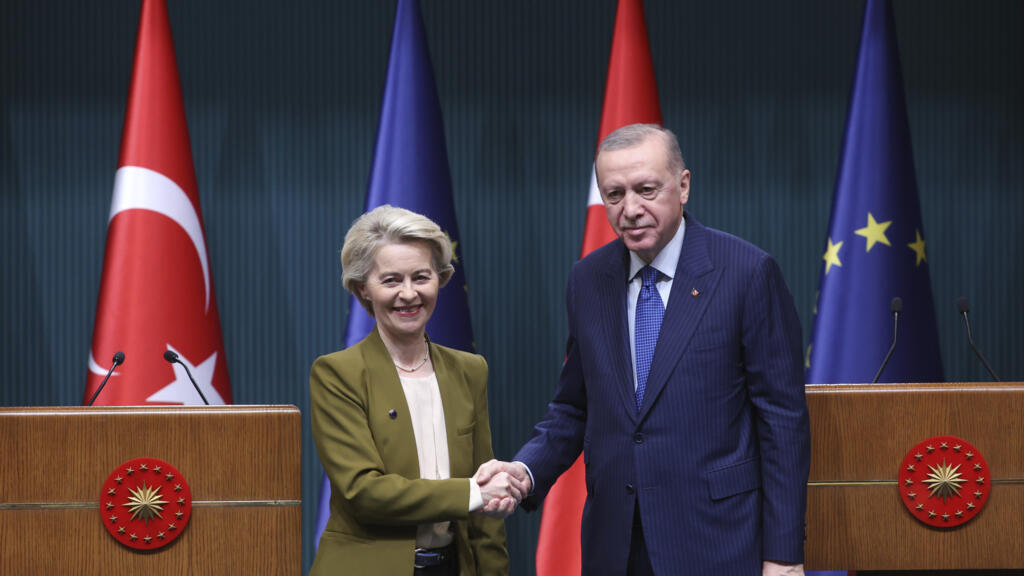
European Commission President Ursula von der Leyen and Turkish President Recep Tayyip Erdoğan in Ankara on 17 December 2024. Credit: AP. Source: InfoMigrants
The photograph of Ursula von der Leyen and Recep Tayyip Erdoğan, taken during her visit to Turkey in 2024, shows that the central logic underpinning this agreement remains very much alive today. More recently, just after the outbreak of the war in Iran, Ms von der Leyen’s first reaction was to call the Turkish president in order to reaffirm the importance of securing Europe’s borders and preventing a potential flow of refugees from Iran towards Europe.
Between Humanitarian Support and Institutional Dependency
For millions of refugees, programmes funded through the FRIT have represented an important resource in a context of acute vulnerability. They have helped support certain essential services, particularly in the areas of healthcare and education. The map below provides a concrete example: the blue dots indicate healthcare centres for migrants and refugees in Istanbul, funded by the European Union.
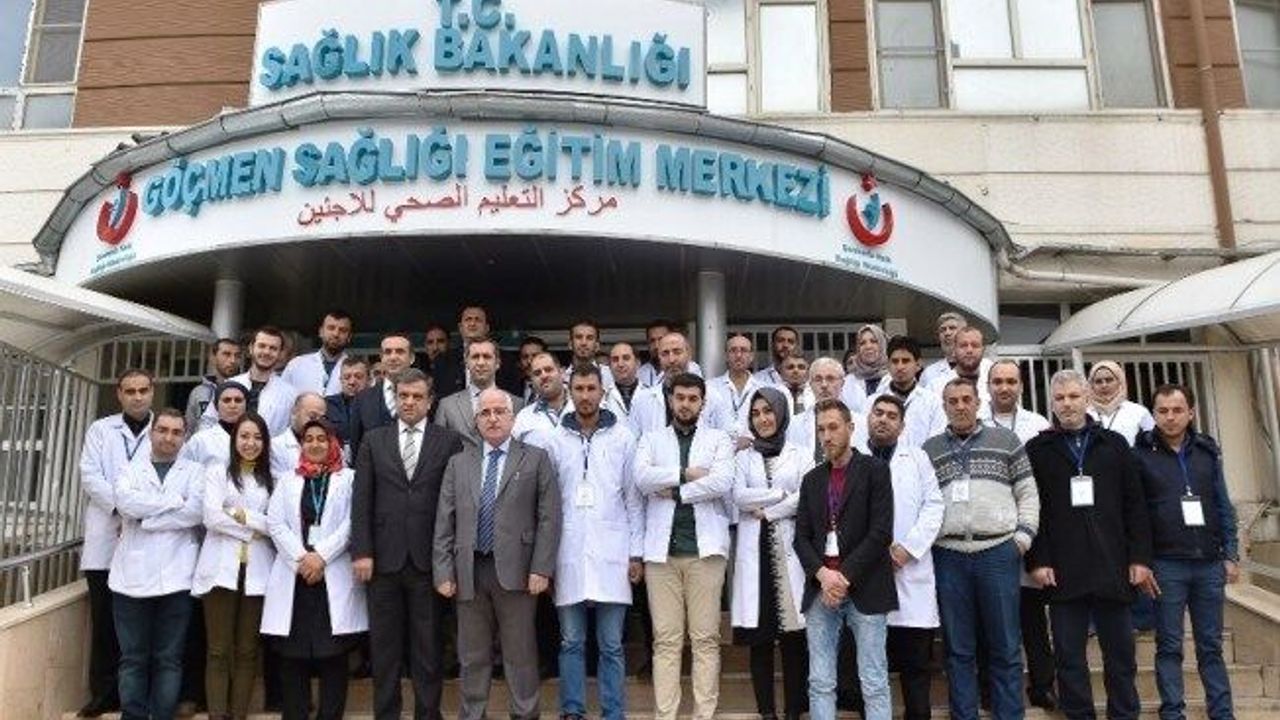
Photograph of a medical centre for refugees, “Health Clinic for Refugees and Migrants”, funded by the European Union. Source: Istanbul Burda
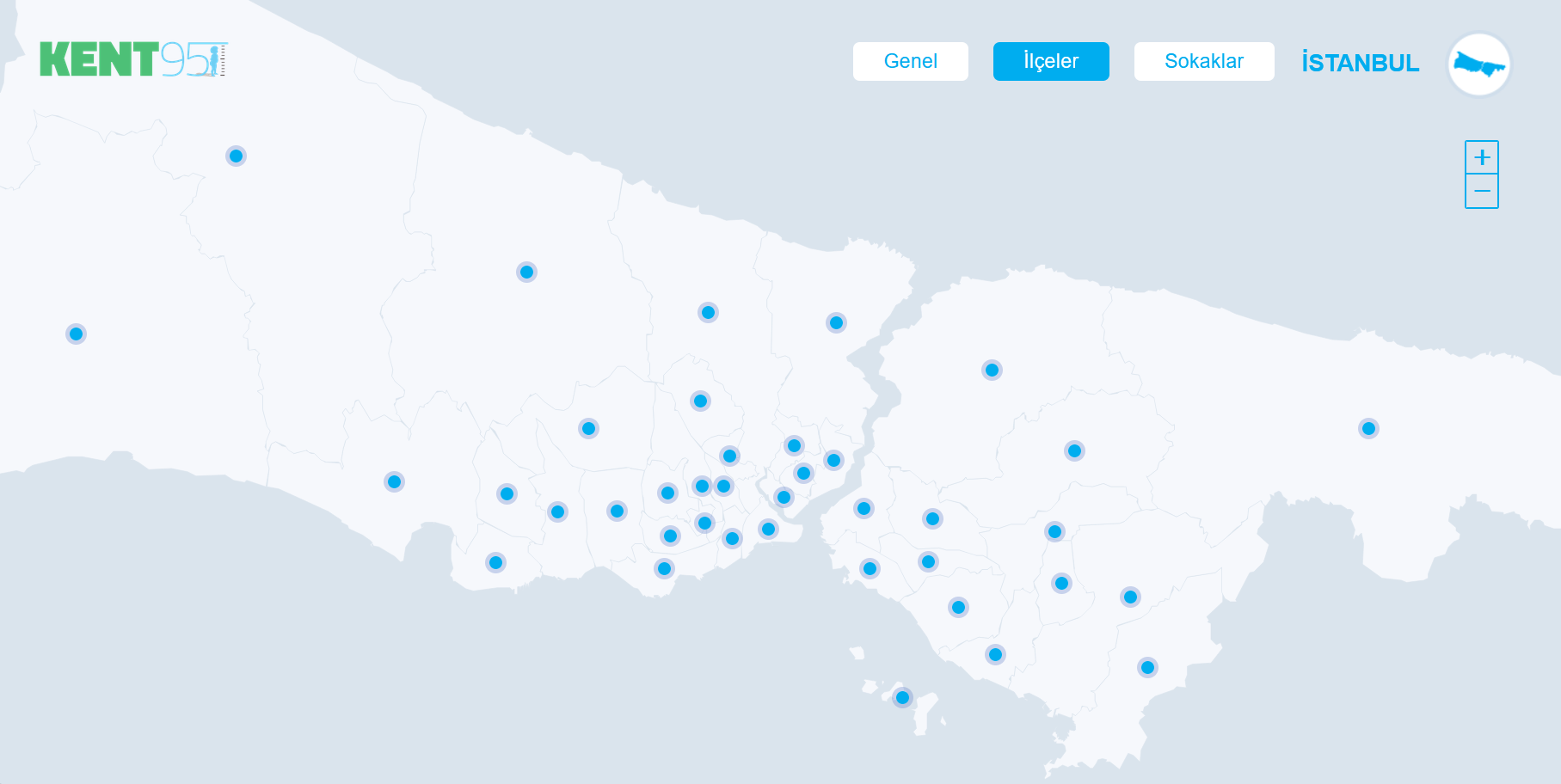
Healthcare centres for migrants and refugees in Istanbul, interactive map, accessed in June 2026. Source: Kent95
But these funding mechanisms also reveal the ambivalent effects of the agreement. Aid relies largely on external, temporary, project-based resources. It makes it possible to respond to immediate needs without necessarily building a sustainable and integrated public policy. Thus, an agreement presented as temporary has gradually been transformed into a structural mechanism, while keeping the people concerned in a temporary situation that has been prolonged indefinitely.
In recent years, this precariousness has become even more visible with the gradual withdrawal of certain resources and the restriction of rights. One particularly striking recent example is the following: since 1 January 2026, free access to healthcare for Syrians under temporary protection has been abolished. They must now pay for healthcare received in public hospitals in Turkey. This change is not merely technical: it also functions as an indirect instrument of migration control. By making living conditions more difficult, it contributes to encouraging Syrians to leave, either for Syria or for another country. Reception policies are thus being transformed into tools of migration regulation, based no longer on integration, but on encouraging departure.
A Restricted Right to Asylum
Another major effect of the EU-Turkey agreement concerns the erosion of the legal framework and the gradual reshaping of the right to asylum. Several developments can be highlighted. Before 2018, UNHCR played a central role in monitoring applications for international protection. Since 2018, asylum procedures have been centralised within the Turkish administration, which now manages the entire process.
Since this centralisation, however, there has been a significant decline in the number of applications for protection in Turkey, as well as a low rate of positive decisions. This development reflects increasingly restricted access to asylum.
It should be recalled that, in Turkey, Syrians fall under the temporary protection regime. Unlike refugee status in the European Union, this status does not provide robust and durable protection. It nevertheless remains important, as it grants access to certain rights, notably healthcare and schooling. From this perspective, the reception of Syrian refugees in Turkey has long been more structured than in other countries neighbouring Syria, such as Jordan or Lebanon.
For people of other nationalities, those who obtain “conditional refugee” status (şartlı mülteci) can also access certain services, particularly education and medical assistance. But overall, access to asylum remains very limited. As for undocumented people, they remain largely invisible and have virtually no access to rights or public services. Since 2018, administrative courts have rejected the majority of appeals relating to applications for protection.
The following graph shows the evolution in the number of Syrians benefiting from temporary protection in Turkey.
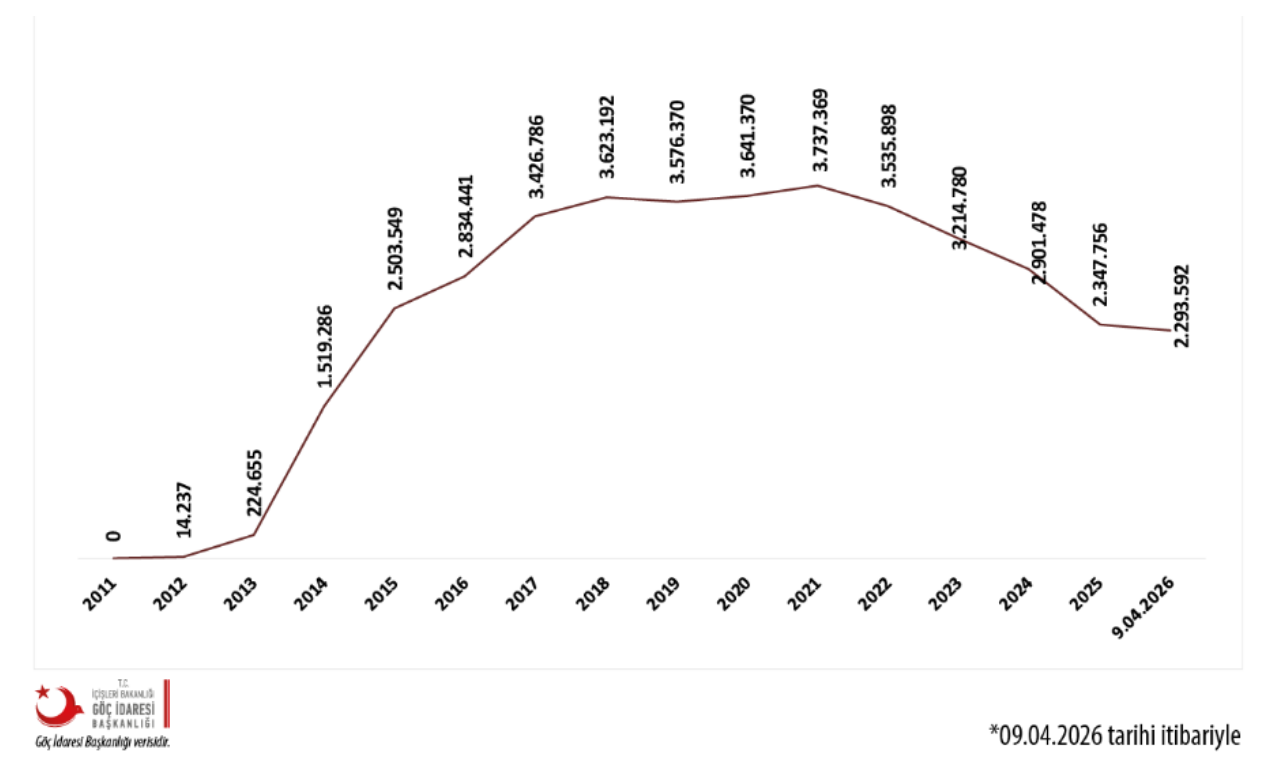
Number of Syrians benefiting from temporary protection by year. Source: Presidency of Migration Management (Göç İdaresi Başkanlığı).
As the graph shows, the number of people benefiting from temporary protection has declined significantly. Since 2020–2021, the Turkish government has increasingly sought to reduce the presence of Syrians in Turkey by encouraging them to return to Syria. But this “encouragement” often amounts to disguised coercion: direct or indirect pressure makes life in Turkey more difficult and pushes many Syrians to consider a return that is not always genuinely voluntary.
The Security-Driven Hardening of the Migration Regime
In recent years, Turkey’s migration regime has taken a more security-oriented turn. Migration is increasingly treated as a matter of control, surveillance and public order, rather than as a social, economic or political issue.
This security-oriented shift is manifested in several ways. First, there has been a proliferation of detention centres. These facilities, intended to detain people in an irregular situation prior to possible deportation, are playing an increasingly prominent role in migration management. Their development reflects a shift in scale: the state is no longer content simply to register or administer the presence of migrants; it is increasingly seeking to control it physically.
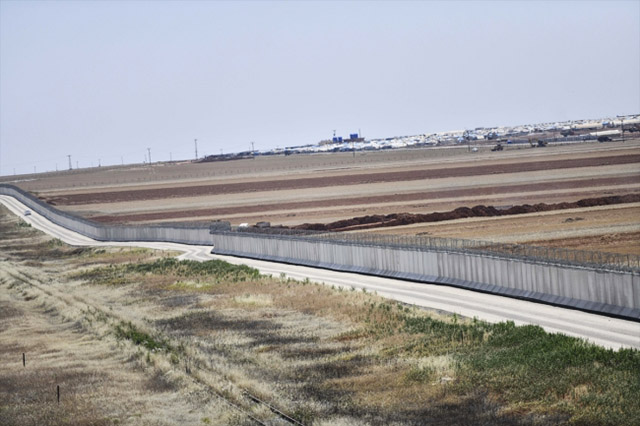
Wall at the Turkish-Syrian border. Source: Kedistan.
The strengthening of controls is also evident at the borders, but also within the country. Identity checks, restrictions on mobility between provinces, registration requirements and the risk of arrest create an environment of permanent uncertainty. For people in exile, this means that everyday life unfolds under the constant threat of administrative checks.
This logic of control also relies on new mobile surveillance mechanisms. In Turkey, law enforcement vehicles, sometimes referred to as “mobile trucks”, are deployed in public spaces to check the identity and administrative status of foreign nationals. They can be seen particularly in major cities such as Istanbul, but also in other cities. These checks make it possible to quickly verify identity documents and residence permits. People who are not in compliance may then be arrested and transferred to detention centres.
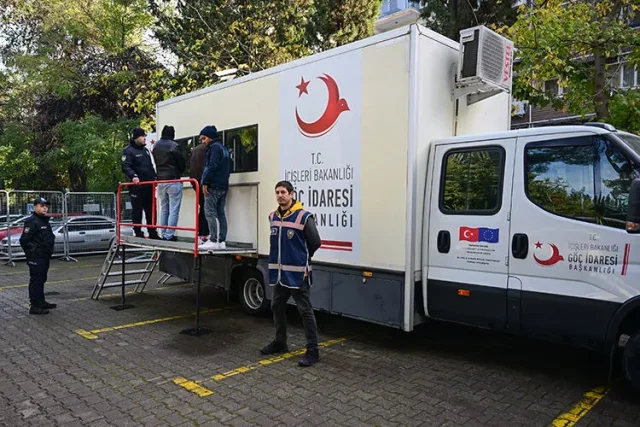
Mobile migration control vehicle established by the Directorate General of Migration Management of the Ministry of Interior to identify migrants in an irregular situation. Source: aa.com.tr.
These mechanisms are not solely the result of national policy choices. Some of them are supported, directly or indirectly, by European funding. This dimension is essential: it shows that externalisation is not limited to a diplomatic agreement between the European Union and Turkey. It takes shape through concrete infrastructures — databases, detention centres, surveillance equipment, mobile vehicles and administrative practices — that profoundly transform migrants’ relationship to space and mobility.
This hardening of migration controls restricts the room for manoeuvre available to people in exile. It makes movement more difficult, access to employment more uncertain, and family strategies more constrained. It also produces a form of everyday exhaustion: living for years within a temporary, unstable and surveilled framework ultimately affects social trajectories, plans for the future and family relationships.
Social Divisions and the Rise of Xenophobia
The EU-Turkey agreement has also had significant social and political effects. The prolonged presence of Syrian refugees in Turkey was initially framed through a discourse of hospitality. But over the years, this discourse has weakened. Public support for refugees has declined, while anti-migrant and anti-Syrian rhetoric has intensified, to the point of normalising certain forms of exclusion in everyday life.
According to several opinion polls, a very large majority of Turkish citizens — between 75% and 85% — support the return of Syrian refugees to their country of origin. This rejection cuts across the usual political divides: whether supportive of or critical of the government, many citizens share the view that Syrians should leave Turkey.
This development cannot be understood without taking into account the economic crisis, which has been particularly acute since 2018–2019. Inflation, increasing job insecurity, rising housing costs and the impoverishment of a significant part of the population have fuelled social tensions. In this context, refugees are often blamed for problems that are in fact rooted in broader economic and political transformations. They thus become convenient scapegoats.
The perception that resources are distributed unequally also plays an important role. Some members of the Turkish population believe that refugees receive assistance to which citizens themselves do not have access. Even when this perception is based on incomplete or inaccurate information, it fuels strong resentment. It is also instrumentalised by certain political actors, who have made migration a central theme of electoral mobilisation.
Finally, many Turkish citizens feel that their country is shouldering a global responsibility largely on its own. This feeling is not entirely unfounded: Turkey does indeed host a very large number of people in exile, while opportunities for resettlement to Europe remain extremely limited (see table below). But rather than being directed solely at the European Union and the inequalities of the international system, this criticism often turns against refugees themselves.
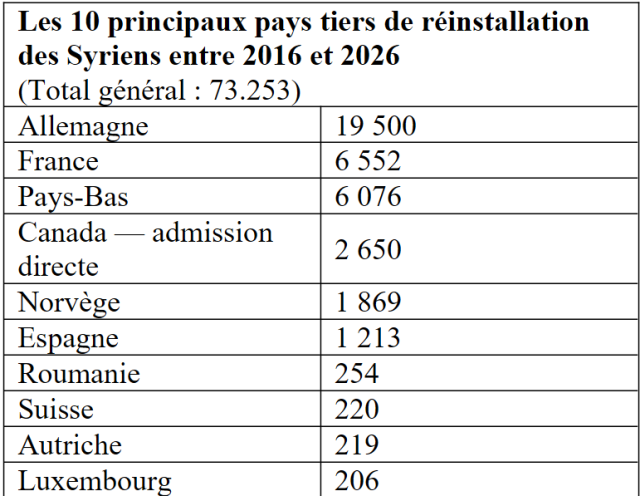
Source: Presidency of Migration Management of Turkey, data on temporary protection.
Unlike in other contexts, such as Tunisia or certain European countries, the Turkish government has not adopted an officially and openly anti-refugee discourse. Nevertheless, a clear shift can be observed in recent years. In response to growing resentment among part of the population, public policies have shifted from a logic of reception towards a logic of encouraging return. The end of financial support for access to healthcare in January 2026 represents an important turning point in this respect, as it affects a population that is already economically highly vulnerable. This is a policy of deterrence, making everyday life more difficult in order to push people to leave.
The consequence is the normalisation of exclusion. Hostile rhetoric, discrimination in access to housing or employment, calls for return and occasional acts of violence are part of an increasingly harsh social climate. After 2020, integration and social cohesion policies were gradually marginalised. The question is no longer so much how to live together, but how to reduce the migrant presence.
This shift has also transformed the role of civil society. In the first years following the arrival of Syrians, NGOs played a central role in reception, often thanks to international funding. But these sources of funding gradually became scarcer. Activities became increasingly focused on service provision, while advocacy capacities declined. In an increasingly authoritarian political context, there has also been a tendency towards self-censorship and a shrinking of critical space within civil society organisations.
Conclusion: A Permanent Temporality
Ten years on, the EU-Turkey agreement can be viewed in two ways. From the European Union’s perspective, it is often presented as a success, as it helped reduce irregular arrivals between Turkey and Greece. But from the perspective of migrants’ rights and living conditions, the picture is much darker. The agreement has contributed to producing lasting precarity, a gradual restriction of rights and the externalisation of responsibilities to Turkey.
This can be described as a regime of “permanent temporality”. What was presented as temporary has become structural: temporary protection has lasted for more than ten years, emergency funding has evolved into a model of governance, and exceptional policies have become the norm. People in exile thus remain suspended in a lasting state of limbo: unable to fully settle, move freely or confidently build a future elsewhere.
Unfortunately, this model is not limited to the Turkish case. It is now being replicated, or renegotiated, in other contexts, particularly in Africa and Asia. This therefore raises a central question for the future: how can we think about migration policies beyond a security-driven logic? And how can they be rebuilt on the foundations of rights, equality and social justice?