 Décryptage des politiques migratoires européennes
First report from the hearings, which are taking place in Chios (Greece)
Friday 20th April – First day
Of the 35 defendants, 30 have been held in preventive detention since last July. They arrive in the courtroom handcuffed, two by two. Outside and inside, the police presence is impressive (about 40 armed policemen). In the courtroom, the defendants, mainly Africans, are located in the centre in rows. The atmosphere is tense.
Opposite the defendants, are the president, the two assessor (…)
Grèce
articles mots
Opening of the « Moria 35 » trial on 20 April on Chios Island
Continuing its interest in the self-mobilization of exiles and protests in their camps, Migreurop is participating in international observations of the Moria trial in which 35 people are being prosecuted as a result of their protesting against the inhuman conditions of their detention. With its experience of observing legal processes, the Migreurop network, which favours the closure of all camps for foreigners, is present at this trial, which symbolizes the unjust migration policies adopted (…)
City Plaza Hotel: a landmark of solidarity in Athens

Atlas des Migrants 2017
These illustrations were born from encounters. Beyond discussions, there sometimes emerge links of fondness and friendship between migrants, activists and researchers, which can produce crucial information for our understanding of seemingly inconceivable processes.
As soon as the “migration corridor” was closed in Spring 2016, the streets of the Greek capital became home to more than 25,000 homeless people. In opposition to the “encampment policy” of the Greek government, squats were (…)Mustafa’s journey

Atlas des Migrants 2017
‘We are not refugees, we are humans,’ summed up Mustafa at the end of a speech in which he patiently retraced the steps of his migratory journey at a cartographic workshop held at Athens’ City Plaza (a squat in a former hotel which lodges over 700 refugees).
This veritable personal map gave a telling account of the physical and mental trials incurred in the journey, and brought to light, through the prism of feelings and memories, an experience of migration that has become a daily (…)The European Union cannot abolish winter: it must instead put an end to the criminal hotspot policy!
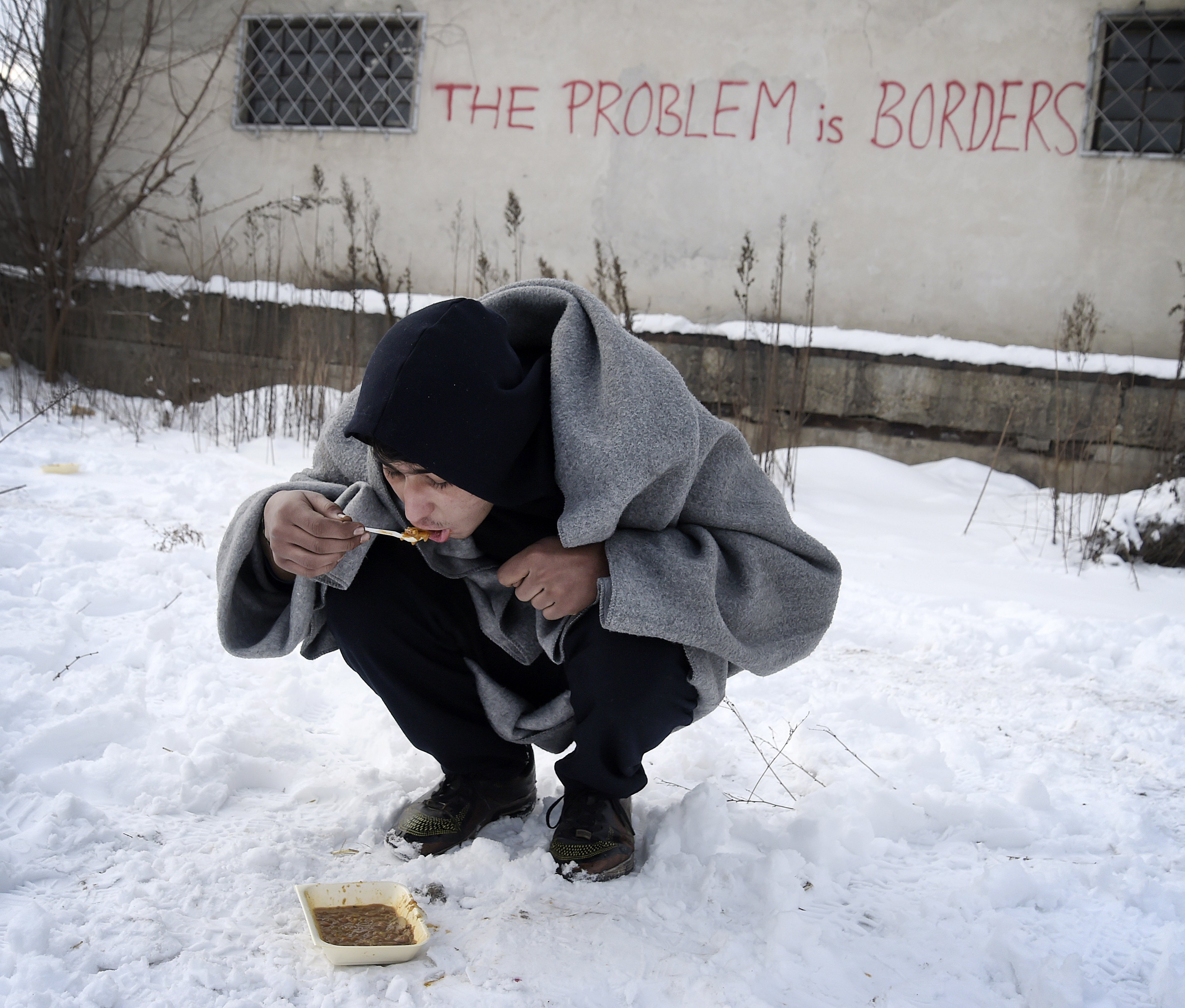
At what point does failing to assist a person in danger become a crime? How many deaths are necessary to constitute a crime against humanity? These questions have been raised for years in relation to the thousands of people who have died in the Mediterranean due to the lack of legal routes into the European Union (EU). Today, the increasingly serious situation of thousands of refugees, trapped by freezing temperatures in Greek camps and on the ‘Balkan routes’, directly challenges the choices (…)